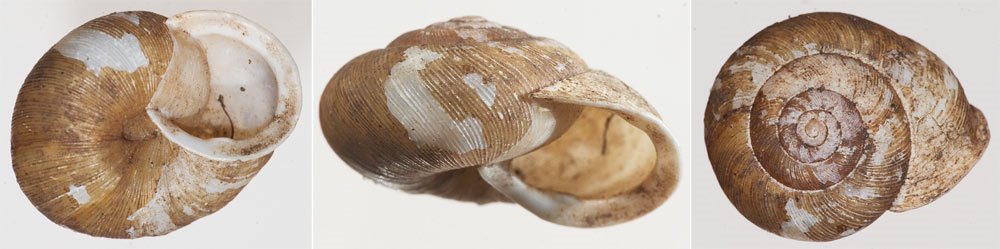
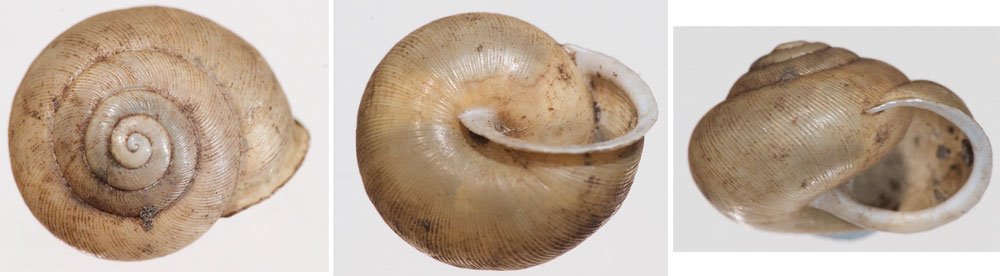
For those of you who have visited this site in vain to find something new: I apologize to both of you. The demands of a dissertation have taken center stage.
Effects of Rock Climbing on snail diversity:
A while ago, I was perusing some snail literature and I ran into an article by McMillan et al. (2003)1.
It had gotten picked up by one of the science news (http://www.sciencenews.org/articles/20030412/fob4.asp) feeds and the summary article garnered two comments, which I've quoted here:
I feel compelled to respond to this article. No one can enter and leave the wilderness without a trace, whether on foot, bike, horse, all-terrain vehicle (ATV), skis, snowmobile, or snowshoes. However, rock climbing is among the least invasive outdoor activities. Apparently, someone with a personal vendetta against rock climbers discovered that a snail population in one location might be affected by climbers. Is there anyone available to consider the effect of a single, noisy, smoke-spewing, oil-dripping ATV on a forest road?
...
Your article seems myopic. This is like doing a study to find that there are fewer species living on trails than untouched land. The benefits of the sport of climbing to the environment are much more important than this finding. Every climber is an environmentalist and open-space advocate.
My first reaction is that these folks commenting assume that because their recreational activities have a more subtle effect on nature than say ATV folks, they should be exempt from scrutiny of the impacts of their recreation. Nothing could be further from the truth. By that rationale, one could say that because I am trying to understand the ecological history of snails and because I feel that the results I get are by an large good for the environment, I don't need to understand the impact of my activities. There are times when "environmentalists" pat themselves on the back too much. Everything we do on this planet will affect the communities of organisms we are near. Bootstrap Analysis had an excellent piece on the perils of feeding feral cats. You may certainly think of yourself as a "nature lover," but don't be surprised when you find out that you're causing problems just by 'being there.'
My second reaction is that the comments are understandable. If given a choice between reducing ATVs and climbers, I would start with ATVs. But it also has an important message for resource managers: ALL trails have an effect.
Left-handed snails
My second paper was written by Dietl and Hendricks (2006)2
First off, a little disclosure - I worked with the 2nd author at the Geology Museum at UW-Madison for several years, so I know him personally.
This paper was interesting - their proposal was that sinistrally coiled snails persist (despite the disadvantages: see Aydin's Snail's Tales for further discussion) because there is an anvantage in surviving predatory attacks by crabs. Their null hypothesis was that handedness has no impact on scarring from crab attacks (not every attack is successful). They rejected their null hypothesis, so therefore the left-handed snails were statistically less likely to bear predation scars. One explanation they provided was that sinistral snails were more likely to be destroyed by predators (thus the fewer scarred survivors), but they felt that this was unlikely given the similarity in morphology and other shell characteristics.
So why the significant difference? They - and others studying the existence of left-handedness in people - propose that there is a survival advantage. Encounters with left-handed organisms is rare enough that right-handed organisms are at a disadvantage when it comes to direct conflict (such as a left handed batter against a right-handed pitcher) and thus left-handedness conveys a survival (or batting) advantage. Thus, the trait persists - if it was completely deleterious to be left-handed, one would assume that there wouldn't be any left.
I agree with the basic idea of the left-handed advantage. I also think that the results of Dietle and Hendricks (2006) are compelling. But, I think that both the researchers, and others in the past, have approached this issue from the wrong perspective. Namely it is rather anthropomorphizing to call them left-handed and right-handed and one needs to be careful in drawing overly broad generalizations about handedness. Still, it may help explain why - despite its deleterious effects - sickle cell anemia persists, since it does convey a higher likelihood of survival against malaria. But that's the post for another day.
1McMillan, M.A., J.C. Nekola, and D.W. Larson. 2003. Effects of rock climbing on the land snail community of the Niagara Escarpment in southern Ontario, Canada. Conservation Biology 17(April):616-621.
2Dietl, G.P., and Hendricks, J.R. 2006. CDrab scars reveal survival advantage of left-handed snails. Biology Letters. (Published online - sorry, I don't have a link right now).